From Ge Yu Lu to Ge Yulu
This long essay is published in Made in China Journal (Global China Lab APS/Open Access)
From 2013 to 2017, migrant artist Ge Yulu (葛宇路, b. 1990) carried out his private project Ge Yu Lu (葛宇路), silently and secretly installing a street sign with his name on an unnamed road in the chaotic bustle of Beijing, as well as embedding it in digital maps such as those of Gaode (高德) and Baidu (百度), which provide real-time navigation for everyday use. This was possible because in Chinese, lu (路), the final character in Ge’s name, also means ‘road’. As the street was seamlessly transformed into ‘his own’, Ge developed an emotional connection to the people who passed by it each day. He often returned to the site, watching and wondering what might unfold on ‘his road’. Once, a drunk man stumbled out of a luxury Lamborghini, vomiting and crying like a desperate child on a dark, frozen night. The road, impartial and unassuming, bore the mundane realities of life—each passer-by’s joy and sorrow—regardless of Beijing’s rigid and complex class hierarchy.
This essay presents a case study of the widely known—and at times controversial—artist Ge Yulu and his interventionist practice. Through an account of Ge’s life and career, including his early years as a grassroots migrant artist navigating precarity in Beijing, the essay explores how radical artistic gestures are gradually tempered, and often reshaped into more palatable forms that conform to institutional aesthetics. At the same time, it shows how a persistent critical impulse—despite the risks of censorship, social marginalisation, and financial hardship—sustains hope and continues to provoke public engagement.
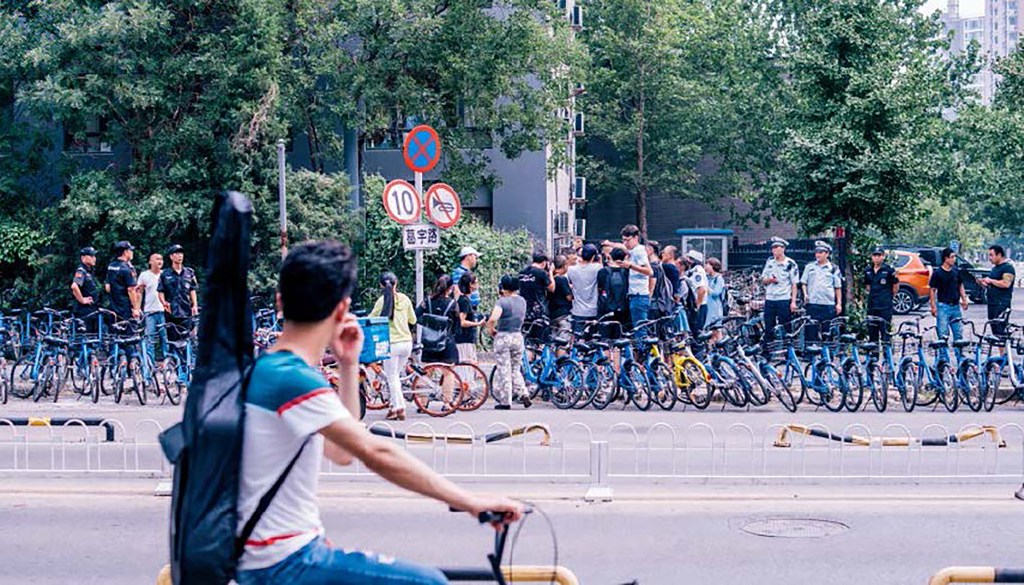

Image courtesy of the artist and Beijing Commune
 👀 projects & publications
Leave a comment