This commissioned essay was published in Burlington Contemporary (2026).
[…] The exhibition does not attempt to empty the titular label of political meaning, but rather translates it into the codes of display: what appears in the galleries is what can be stabilised as image or memory. Here, political art is not silenced, but rerouted, freed from immediate risk, yet held firmly within the limits of the institution. As George Steiner once observed, ‘Language can only deal meaningfully with a special, restricted segment of reality. The rest, and it is presumably the much larger part, is silence’.
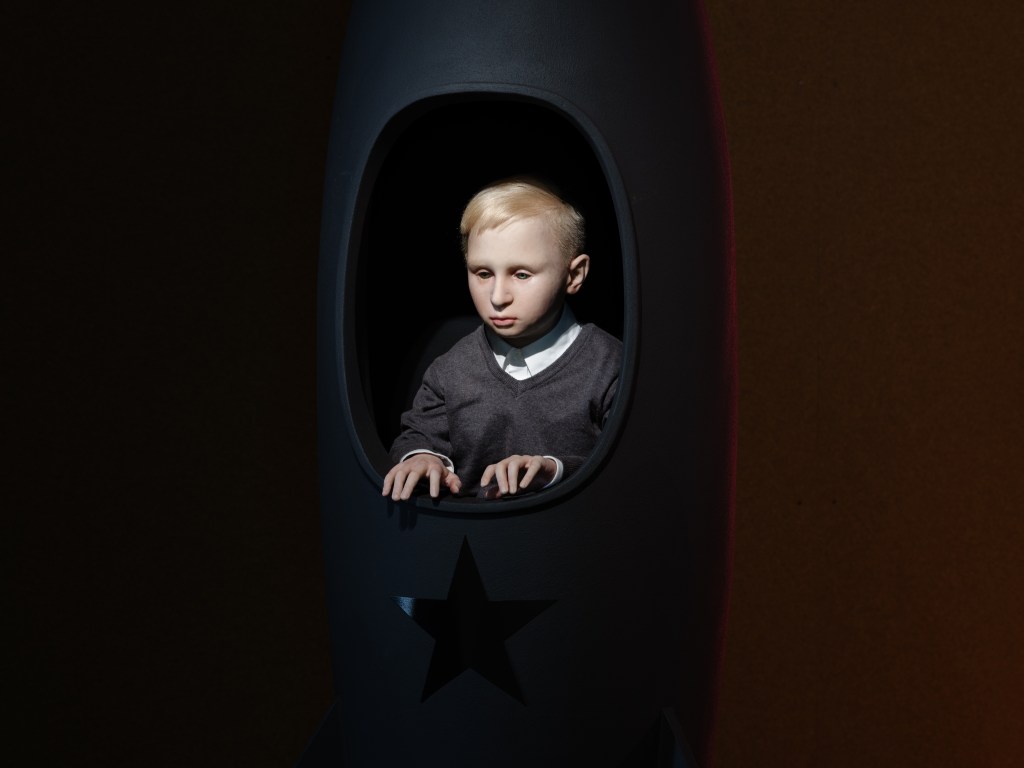
Once Upon a Time, by Li Wei. 2019. Silicone, metal, 3D-printed plastic, paint, clothing and human hair. (Courtesy the artist and the White Rabbit Collection; photograph Hamish McIntosh; exh. White Rabbit Gallery, Sydney).
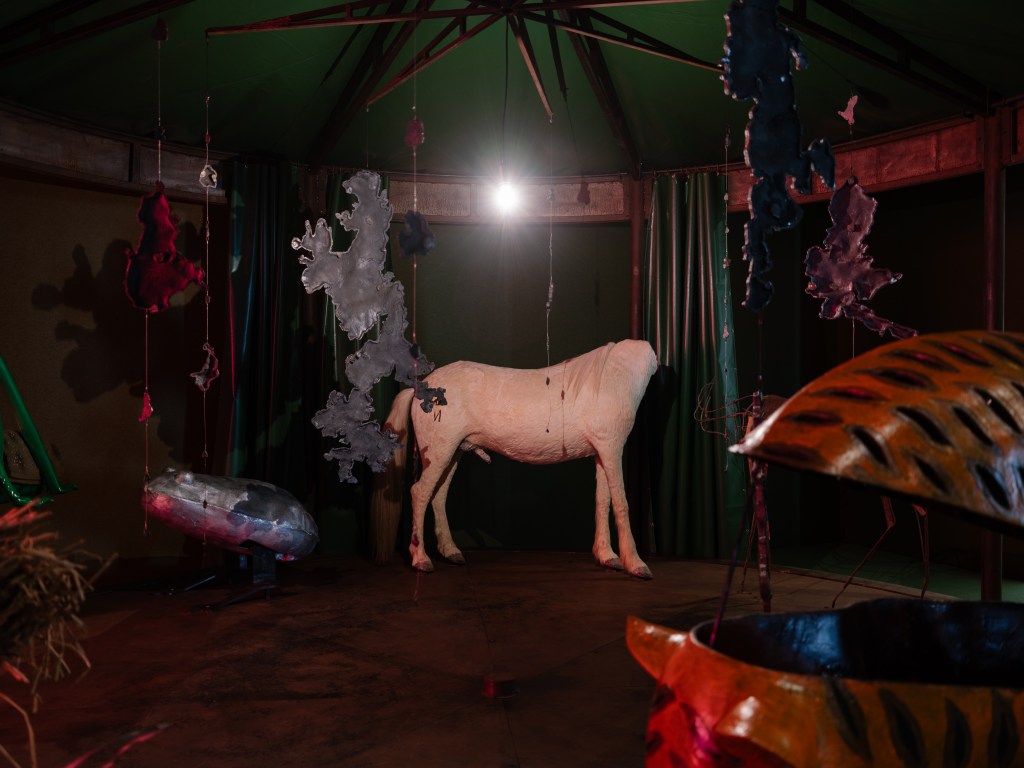
Les Consoles de Jeu Souveraines, by Huang Yongping. 2017. Steel, aluminium, bronze, wood, plastic, fibreglass, paper, straw and taxidermy horse, dimensions variable. (Courtesy the artist and the White Rabbit Collection; photograph Hamish McIntosh; exh. White Rabbit Gallery, Sydney).
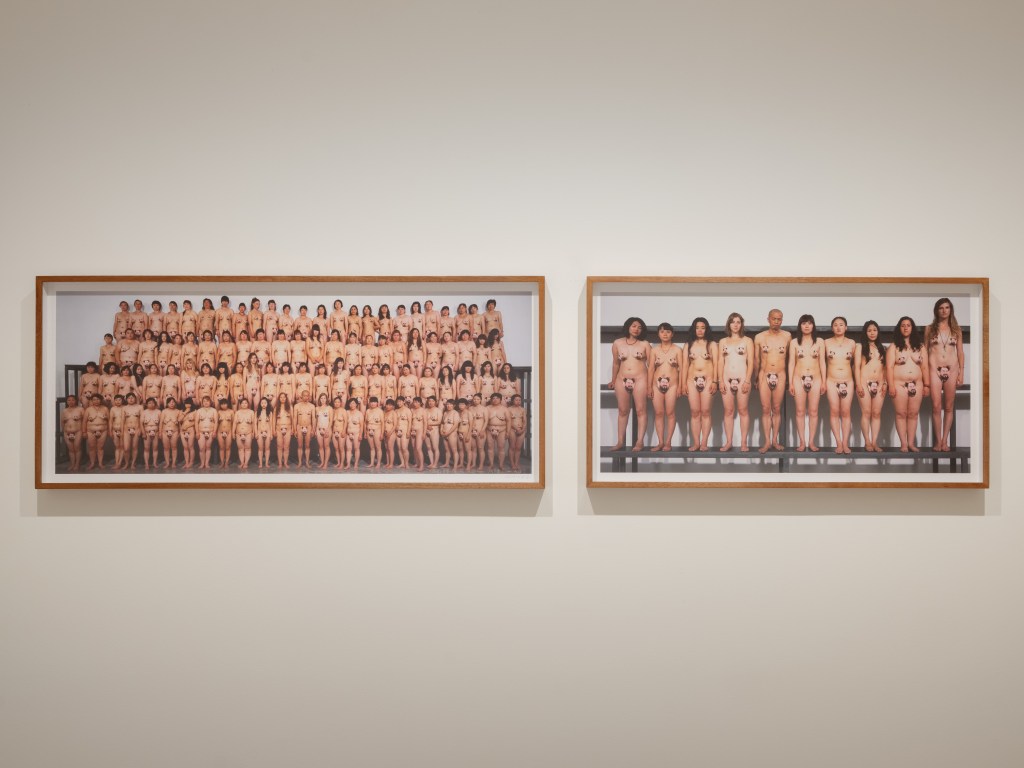
Swimsuits, by He Yunchang. 2011. Performance (all participants’ bodies partially covered by cut-out photographs of Ai Weiwei’s face) and inkjet prints, dimensions variable. (Courtesy the artist and the White Rabbit Collection; photograph Hamish McIntosh; exh. White Rabbit Gallery, Sydney).
 👀 projects & publications
Leave a comment